
Industrial-Grade Data Gateways: Constructing the "Technical Moat" for the Internet of ThingsIssuing time:2026-04-09 14:19 In the field deployment of Smart Healthcare and Industry 4.0, technical teams frequently encounter three critical obstacles:
A Data Gateway is more than just a bridge connecting the physical world with its digital twin; it is the "Guardian" of an enterprise's core data assets. A mature commercial gateway must reach industrial-grade standards across five dimensions: heterogeneous protocol mapping, RFphysical layeroptimization, micro-power scheduling, edge system resilience, and end-to-end cryptographic protection. I. Deep Dive into Core Technical Principles: From Physical to Application LayerHeterogeneous Protocol MappingData from Low Energy Bluetooth (BLE) sensors is typically based on GATT (Generic Attribute Profile) and structured as concise hex byte streams. Conversely, cloud servers rely on standardized application layer protocols based on the TCP/IP stack (such as MQTT, RESTful HTTP, or LwM2M). The gateway's internal microprocessor (such as a high-performance ARM Cortex-M4 core) acts as a "Protocol Stack Translation Engine." Upon capturing BLE advertising packets or establishing a connection, the microcontroller executes low-level Decapsulation, stripping the physical and MAC layer headers to extract the pure Payload. Using a built-in Real-Time Operating System (RTOS), it performs high-speed Endianness Conversion and serialization (e.g., encapsulating into JSON format) via memory pools, finally pushing the data into the upstream network stack. The execution latency of these instructions is controlled at the microsecond level, achieving "zero-latency" interoperability across the OSI model.  RF Link Budget OptimizationIn complex industrial or medical environments, the 2.4GHz band faces severe multipath effects and co-channel interference. The coverage radius of a gateway is determined not just by transmit power, but more critically by RX Sensitivity. RX Sensitivity refers to the minimum power at which a receiver can accurately demodulate a signal (usually expressed in negative dBm). On a logarithmic scale, every 3dB reduction effectively doubles the gateway’s ability to capture weak signals. Top-tier gateways optimize the RF front-end impedance matching (strictly controlled at 50Ω to reduce the Voltage Standing Wave Ratio, or VSWR) and integrate Low Noise Amplifiers (LNA). This allows RX Sensitivity to drop as low as -94.5dBm or even -100dBm, significantly enhancing the system's Link Budget and enabling a stable "wall-penetrating" handshake without increasing the power consumption of the terminal devices.  Ultra-Low Power Micro-ArchitectureFor scenarios dependent on batteries or strict power constraints, low power consumption is not just about "sleep" modes—it is the proactive, granular management of silicon resources. Advanced gateways utilize Clock Gating and power domain isolation at the hardware level. When there is no data transmission, the MCU core enters Deep Sleep, shutting down the High-Speed External (HSE) crystal oscillator and retaining only a low-power Real-Time Clock (RTC) to maintain the system's wake-up rhythm (consuming only micro-ampere level static current). Furthermore, it abandons high-energy polling mechanisms in favor of Event-Driven interrupt wake-ups. The MCU is only instantly awakened to execute radio transmission tasks when a valid threshold jump is detected from the sensors, suppressing overall standby power to an extremely low floor. 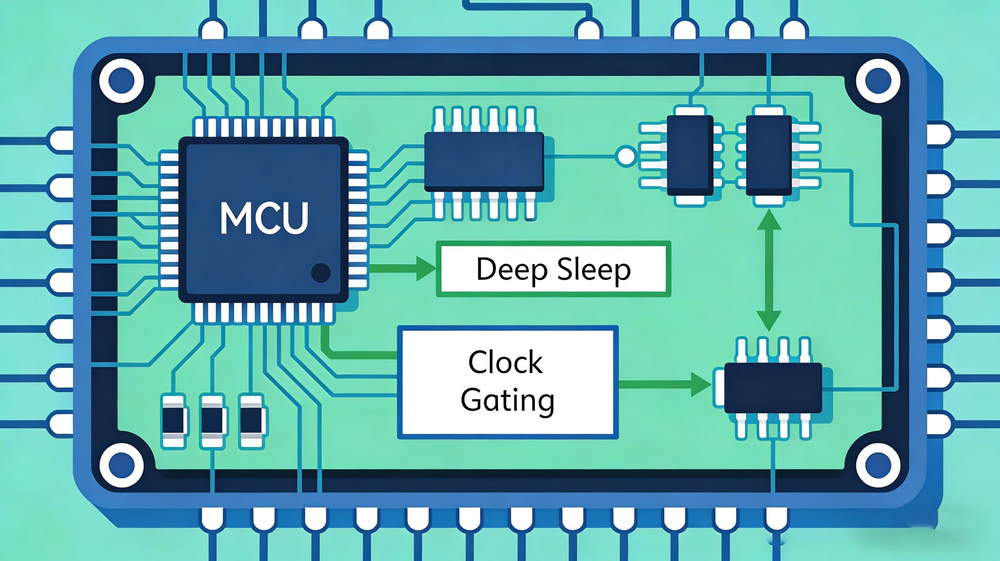 EdgeFault Tolerance & ResilienceIoT environments are often plagued by weak or intermittent network conditions, requiring the gateway to possess "autonomous survival and rescue" capabilities at the edge. The gateway runs a rigorous network state-machine monitoring algorithm (such as a Keep-alive heartbeat mechanism) locally. If an upstream TCP handshake over Wi-Fi or 4G fails, the system immediately intercepts data discard actions and redirects the data stream to local non-volatile memory (such as high-endurance Flash). During caching, the gateway employs advanced Wear-Leveling algorithms to protect storage units and utilizes FIFO (First-In-First-Out) queues for data stacking. Once the link heartbeat returns to normal, the gateway uses MQTTQoS 1 or 2 protocols for asynchronous supplementary transmission, completely eliminating data "evaporation" during connection voids. 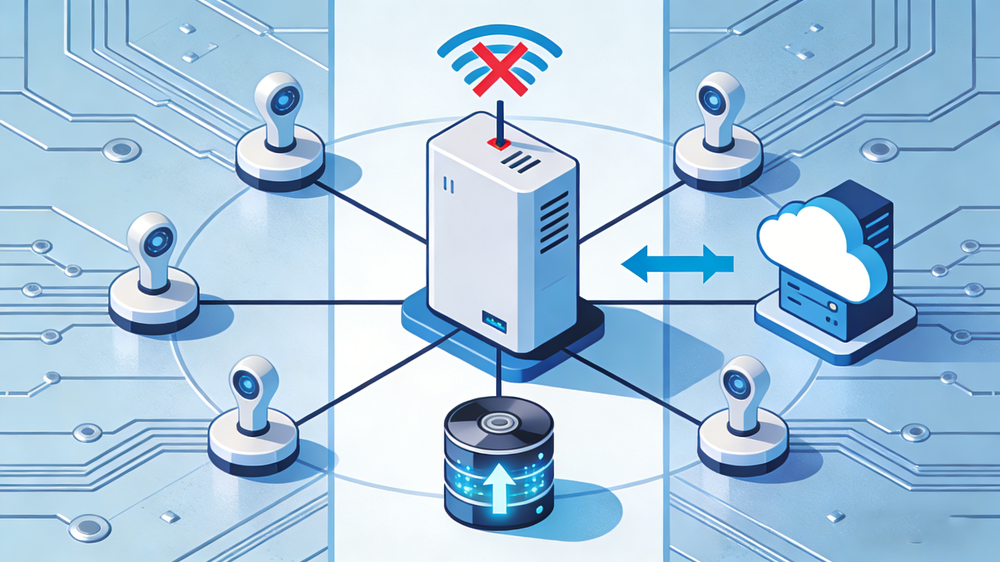 End-to-End Cryptographic SecurityIn an era where data is the core asset, gateways must possess a cryptographic defense line against sniffing, replay, and tampering attacks. This defense is built on a closed-loop "Cloud-Pipe-Device" architecture:
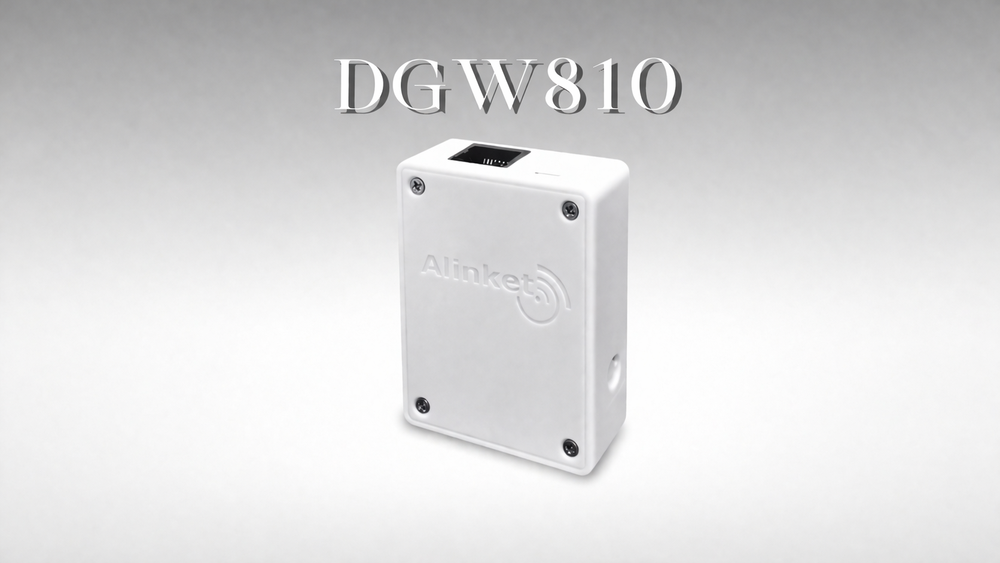
 II. From Core Technology to Field Implementation: Full-Stack Product MatrixAlinket Technologies excels in condensing these complex technologies into compact, robust solutions. Based on the five technical pillars mentioned above, Alinket has developed a gateway family covering various edge environments: The Lightweight Benchmark for Indoor Medical: DGW810In hospital wards or smart homes, space and power are the primary pain points.
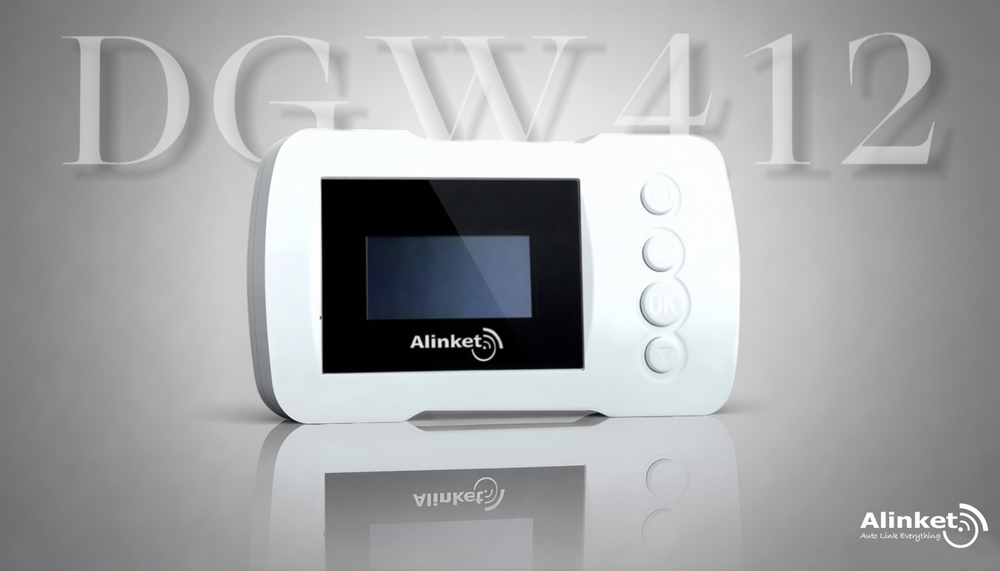
 The Robust Commander for Mobile Monitoring: DGW412Outside fixed Wi-Fi environments, mobile scenarios demand exponentially higher RF link stability and energy scheduling.
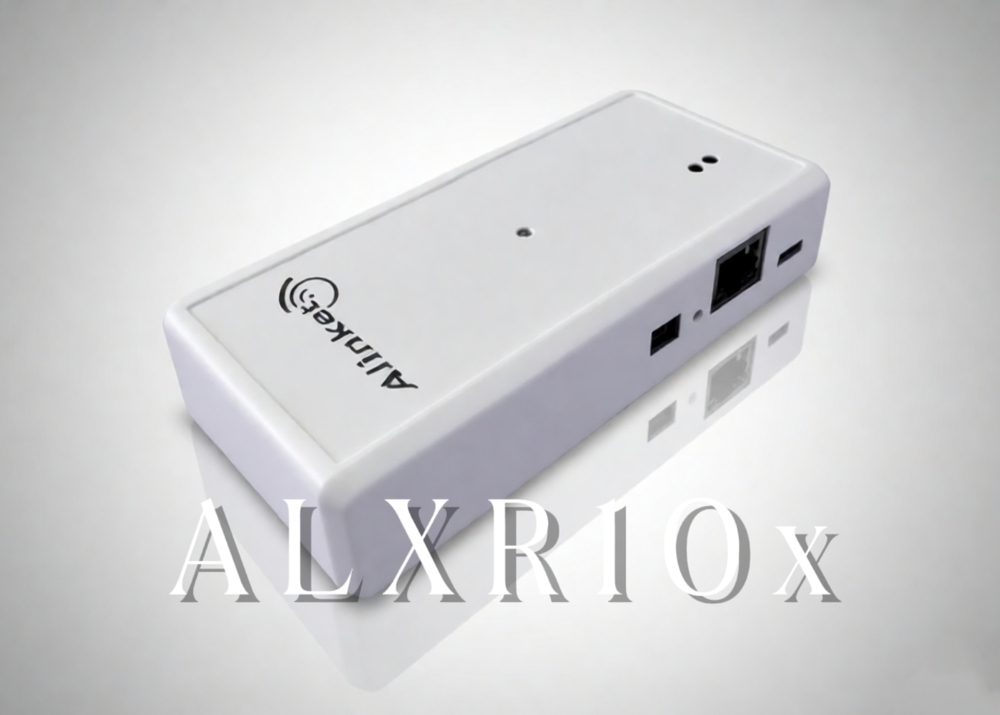
 The Industrial Multi-Mode Fusion Flagship: ALXR10In the harsh domains of industrial control and energy monitoring, absolute robustness is the only metric that matters.
 ConclusionThe essence of IoT technology is to bridge the gaps in protocols, radio frequency, and energy between physical devices and the digital cloud. Through continuous innovation in low-level micro-architecture, Alinket Technologies is constructing an impregnable "Technical Moat." "Auto Link Everything Together." Whether for lightweight medical sensing or heavy-duty industrial deployment, Alinket is committed to providing you with the most professional and stable data transmission foundation. For detailed product specifications and technical evaluation plans, please contact us: Official Website:www.alinket.com Technical Email: marketing@alinket.com Headquarters: Room 221, Building 1, Lane 706, Wuxing Road, Pudong New District, Shanghai |