Abstract
As Internet of Things (IoT) technology matures, terminal devices in industrial control, smart healthcare, and enterprise management networks are seeing exponential growth. However, the influx of heterogeneous devices has fundamentally dismantled traditional IT security boundaries. Facing increasingly sophisticated cyberattacks, the traditional Pre-Shared Key (PSK) model can no longer meet the rigorous demands of modern enterprises for data confidentiality, integrity, and access control. This article provides a deep dive into the Extensible Authentication Protocol (EAP) and its integration with the IEEE 802.1X standard, exploring how dynamic key management, mutual authentication, and Zero Trust principles can reshape the security foundation of IoT networks.
Industry Background: Structural Security Challenges in IoT
In the vision of "Everything Connected," IoT devices are no longer just isolated data collection nodes; they are essential productivity tools deeply integrated into core business processes. However, due to limited computing power, the lack of human-machine interfaces (Headless), and poor physical security in deployment environments, the network access layer faces severe structural challenges.
1.1 Limitations of Traditional Pre-Shared Key (PSK) Architecture
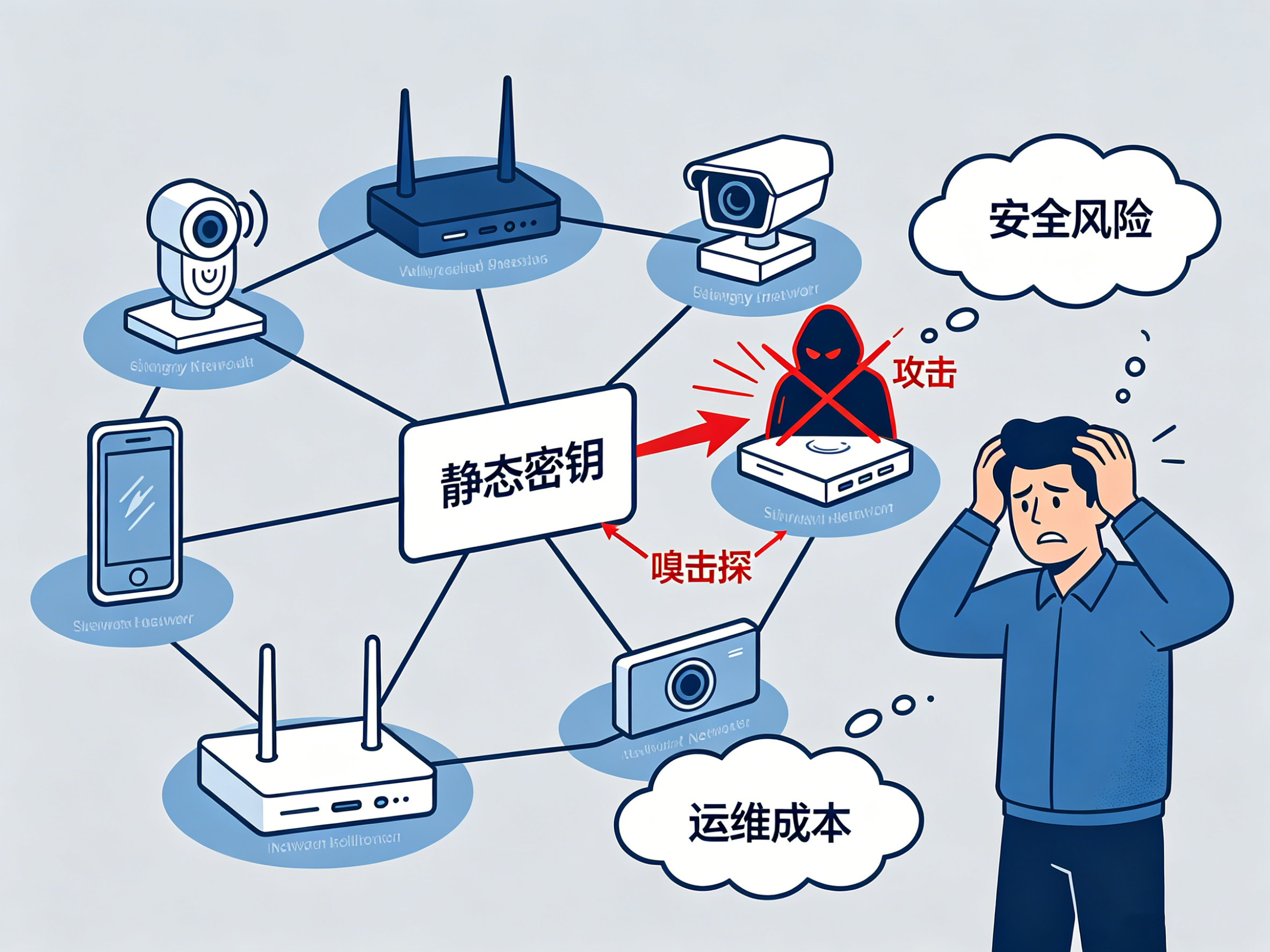
Many IoT projects still rely on WPA2/WPA3-Personal (PSK) modes for network deployment. This static password-based mechanism has three fatal flaws in enterprise applications:
Single Point of Failure Risk: All IoT devices in a subnet share the same encryption key. If a single node—such as a sensor in a public area—is physically compromised or its password extracted, the entire network layer is exposed to sniffing or Man-in-the-Middle (MITM) attacks.
Identity & Audit Blind Spots: PSK validates "passwords," not "identities." Since MAC addresses are easily spoofed, network administrators cannot precisely identify whether a device is a legitimate production tool or a malicious terminal. This renders compliance auditing ineffective.
Prohibitive Lifecycle Maintenance Costs: Periodic password rotation is a security necessity. However, manually updating passwords for thousands of "headless" devices without a UI is operationally impossible and carries high risks of business disruption.
Consequently, migrating the mature IEEE 802.1X/EAP architecture from office networks down to the IoT edge has become a prerequisite for building reliable IoT infrastructure.
Deep Dive: Underlying Principles of EAP Architecture
The Extensible Authentication Protocol (EAP) is a universal security framework that supports various authentication methods. In WLAN and wired networks, EAP typically runs within the IEEE 802.1X protocol to provide "end-to-end" access control.
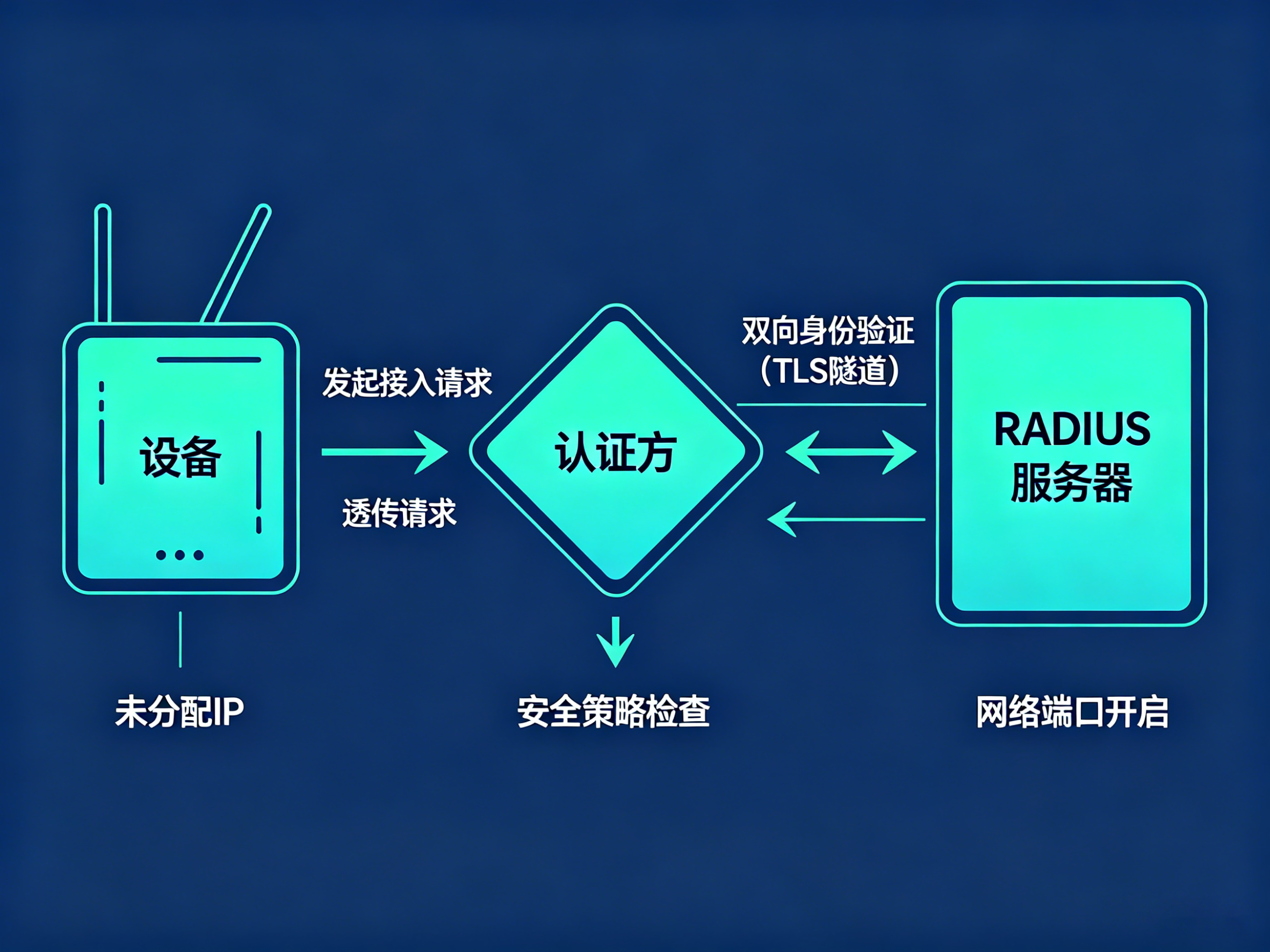
A complete EAP authentication system consists of three core entities:
Supplicant: The IoT terminal device requesting network access.
Authenticator: Usually a wireless AP, enterprise router, or edge gateway. It acts as a "gatekeeper," allowing only EAP traffic through until the device is authenticated.
Authentication Server: Typically a RADIUS or TACACS+ server deployed on-premise or in the cloud, responsible for storing credentials, executing algorithms, and issuing authorization.
2.1 The EAP Authentication Workflow
When an IoT device attempts to connect, the network initiates the EAP state machine:
The device sends an access request to the Authenticator, which forwards it to the RADIUS server.
The server requests credentials (digital certificates or unique accounts) based on security policies.
A secure logical tunnel (e.g., a TLS tunnel) is established between the device and server for Mutual Authentication.
The network port is opened only after the server verifies the device's legitimacy and the device confirms the server is not a rogue station.
Analysis: Mainstream EAP Methods for IoT
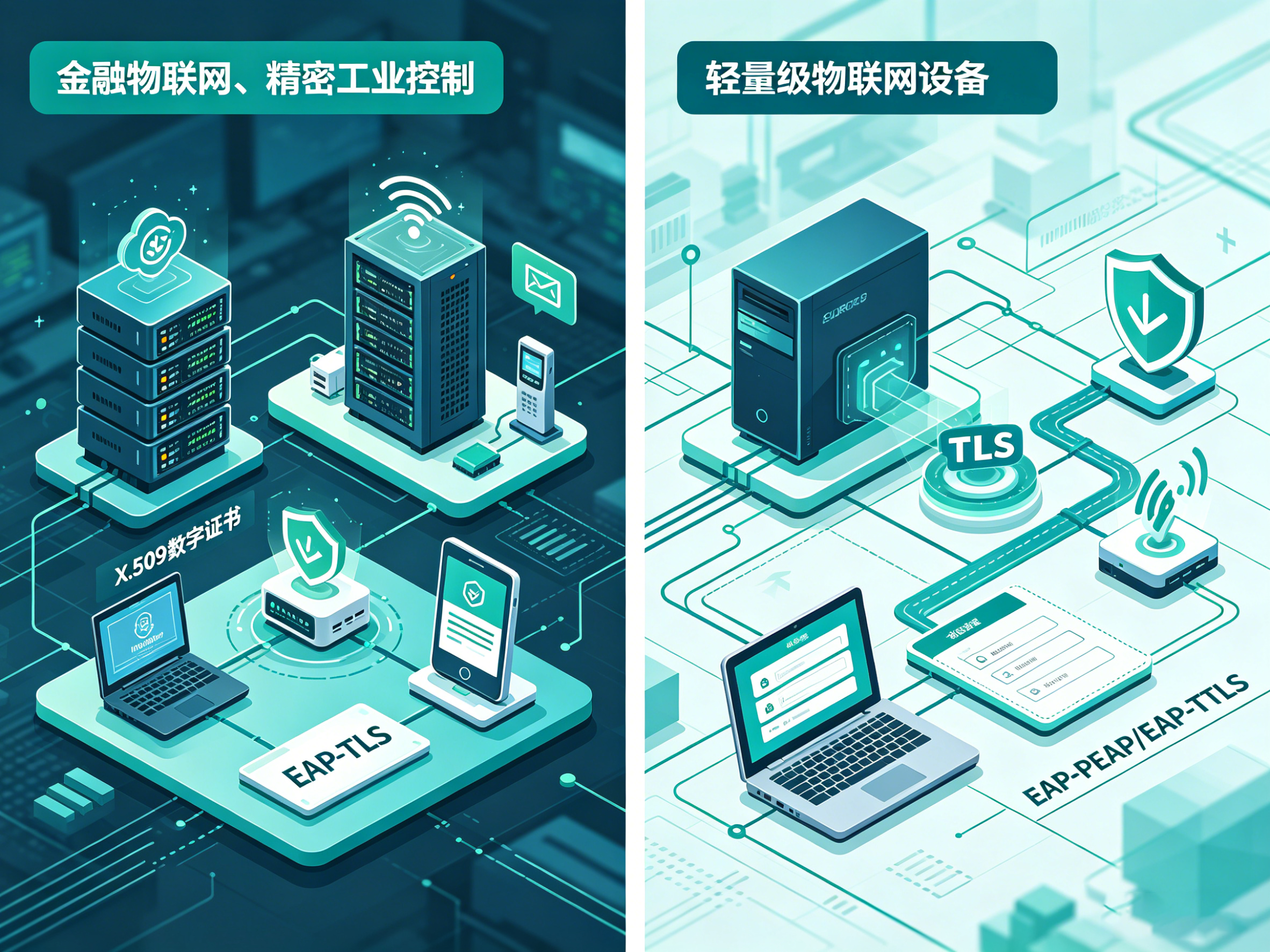
While EAP supports dozens of protocols, three high-level methods are most applicable to complex IoT environments:
Core Business Value: Why EAP Matters for IoT
Integrating EAP is more than a technical upgrade; it is a cornerstone for transitioning toward Zero Trust Network Access (ZTNA).
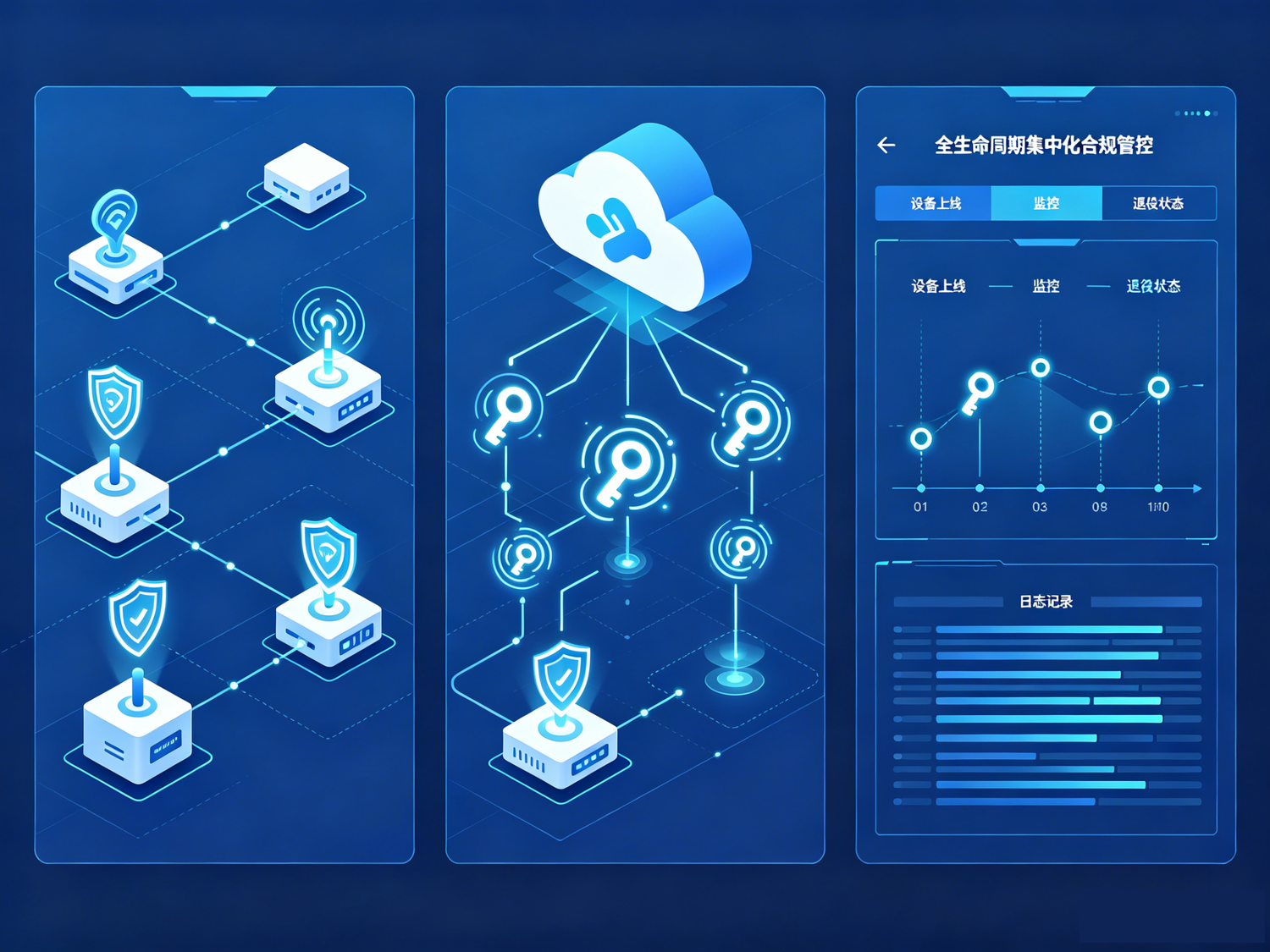
Device-Level Micro-segmentation ("One Key per Device"): EAP issues unique credentials to every node, ensuring that compromising one device does not grant access to others. This strictly limits the "blast radius" of any potential threat.
Dynamic Key Generation & Forward Secrecy: During authentication, EAP negotiates dynamic session keys that rotate periodically. Even if an attacker cracks a current key, they cannot decrypt historical or future data.
Centralized Lifecycle Compliance: RADIUS servers provide a "single pane of glass" for IT teams to manage the entire device lifecycle—from onboarding to instant revocation of credentials for retired devices—meeting strict regulatory requirements like Cybersecurity Classified Protection 2.0 (China's MLPS).
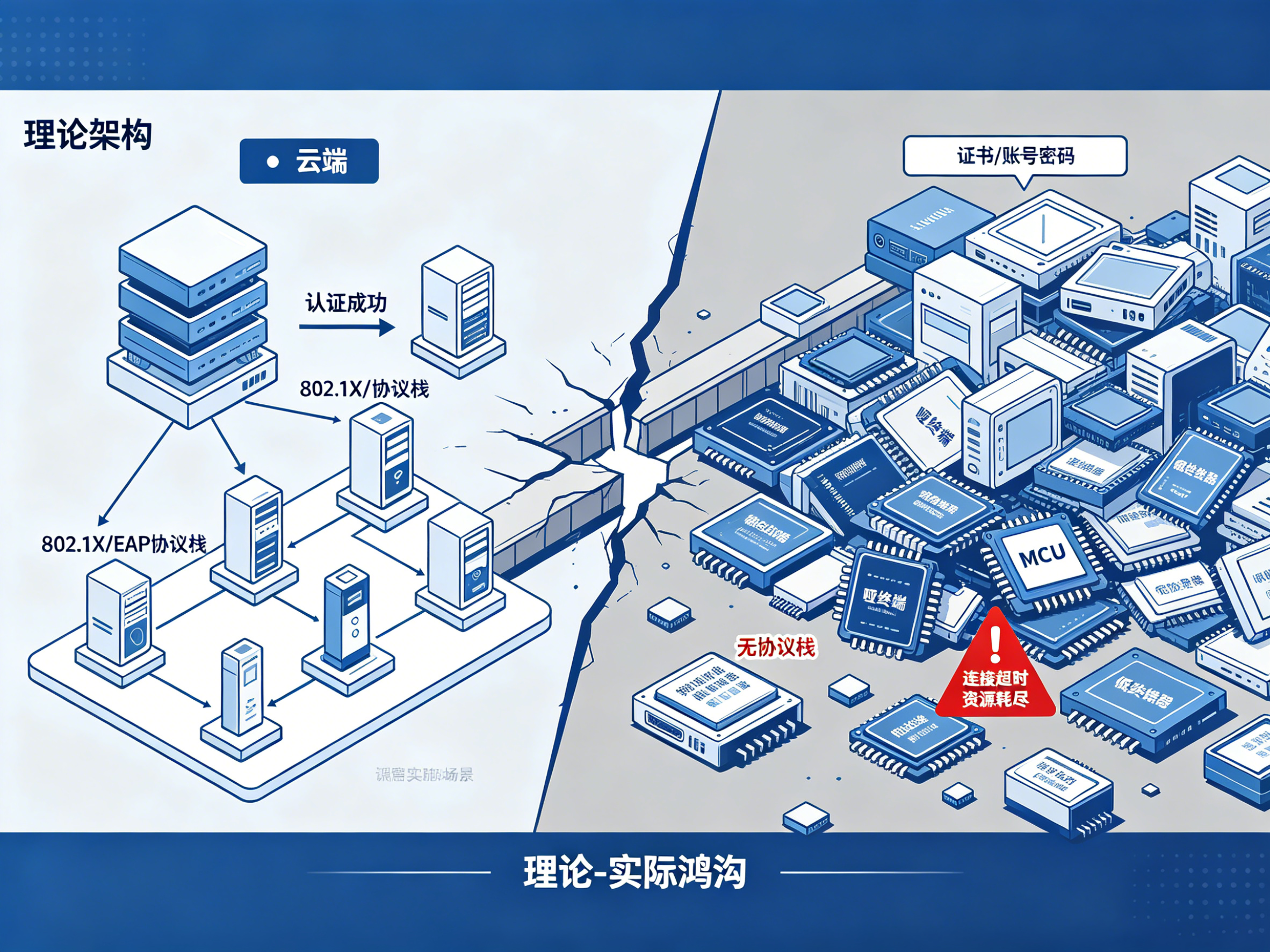
From Theory to Practice: "The Last Mile" Implementation Gaps
Despite its benefits, EAP deployment faces significant hurdles:
Missing Protocol Stacks: Many low-power MCU-based modules lack built-in 802.1X/EAP support.
Credential Deployment Difficulty: Injecting certificates or accounts into "headless" devices is a major bottleneck for large-scale projects.
Resource Constraints: Asymmetric encryption and TLS handshakes are compute-intensive, often leading to connection timeouts on low-power hardware.
Alinket Solutions: Reshaping Edge Security with High Efficiency
Alinket Technology addresses these pain points with a "Self-contained" architecture. By embedding complex EAP stacks, certificate management, and hardware encryption engines directly into the communication modules, Alinket allows developers to implement "finance-grade" security without modifying host-side code.
Embedded Wi-Fi Controllers: Secure by Design
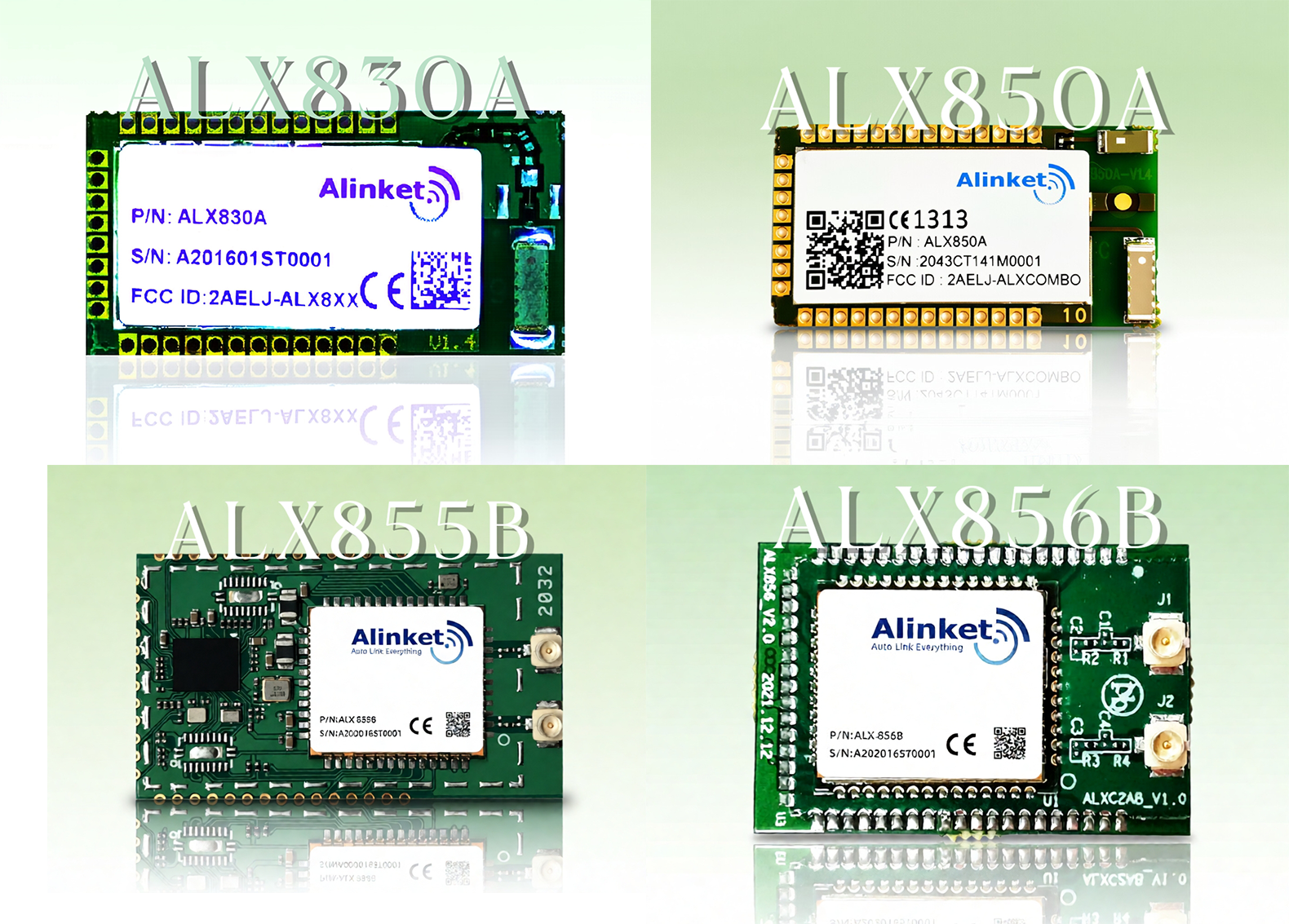
Flagship Wi-Fi 6 (ALX856B): Designed for high-bandwidth medical imaging and industrial control. It features an ARM® Cortex®-M4 core to handle EAP-TLS handshakes smoothly while maintaining superior power efficiency.
Low-Power Standard (ALX850X/ALX830X): Optimized for massive sensor networks. It reduces peak power consumption during EAP handshakes through instruction-set optimization, making it the top choice for battery-operated assets.
Wi-Fi & Bluetooth Combo Modules: Multi-mode Energy Efficiency
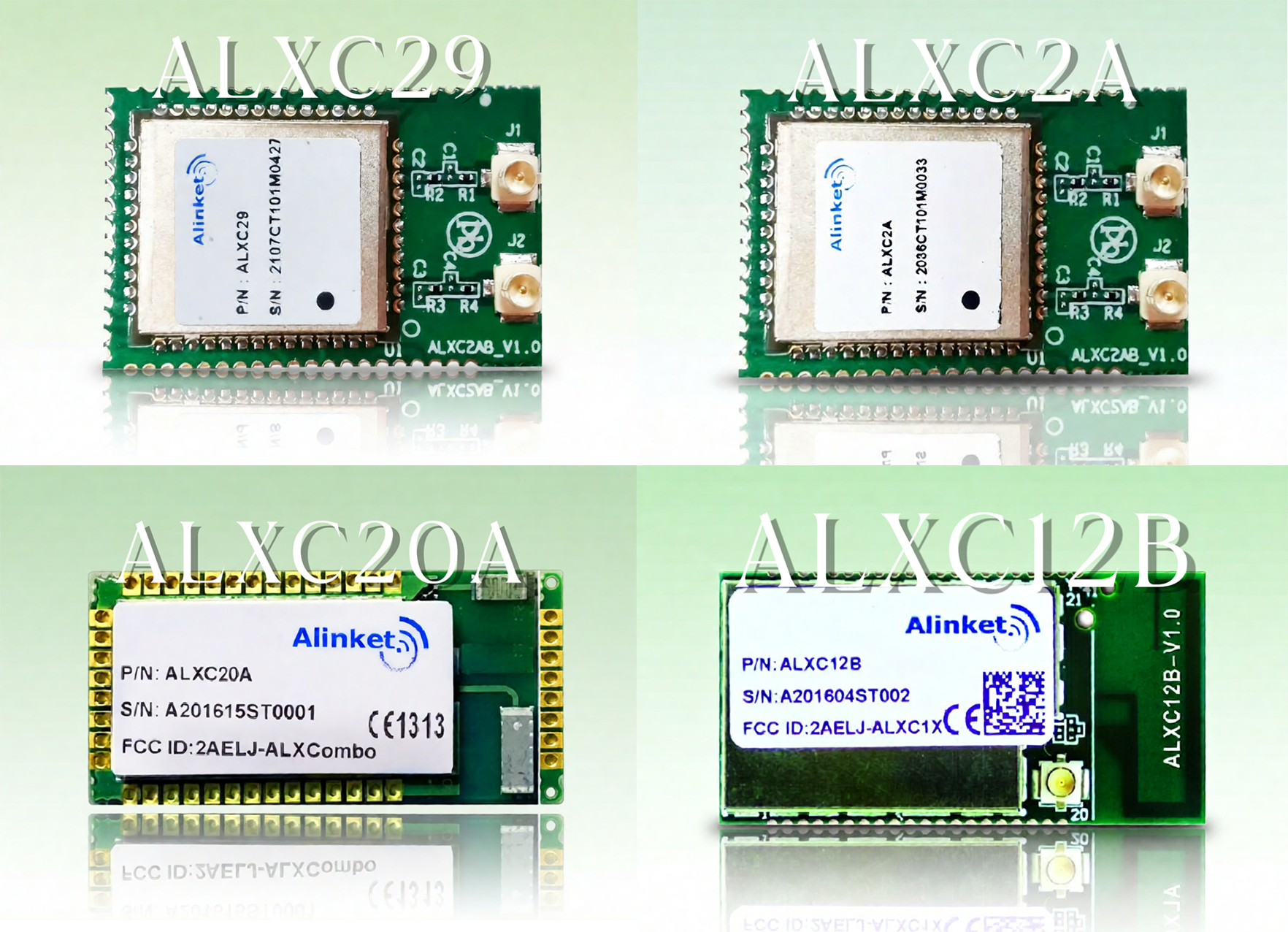
High-Performance Dual-Mode (ALXC2AB): Supports Wi-Fi 6 and BT 5.0. It uses Dynamic Voltage and Frequency Scaling (DVFS) to minimize energy consumption during intensive EAP encryption tasks.
Low-Power Smart Series (ALXC12/20/29): Optimized roaming algorithms reduce the time spent on AP handovers, effectively lowering extra battery drain during movement.
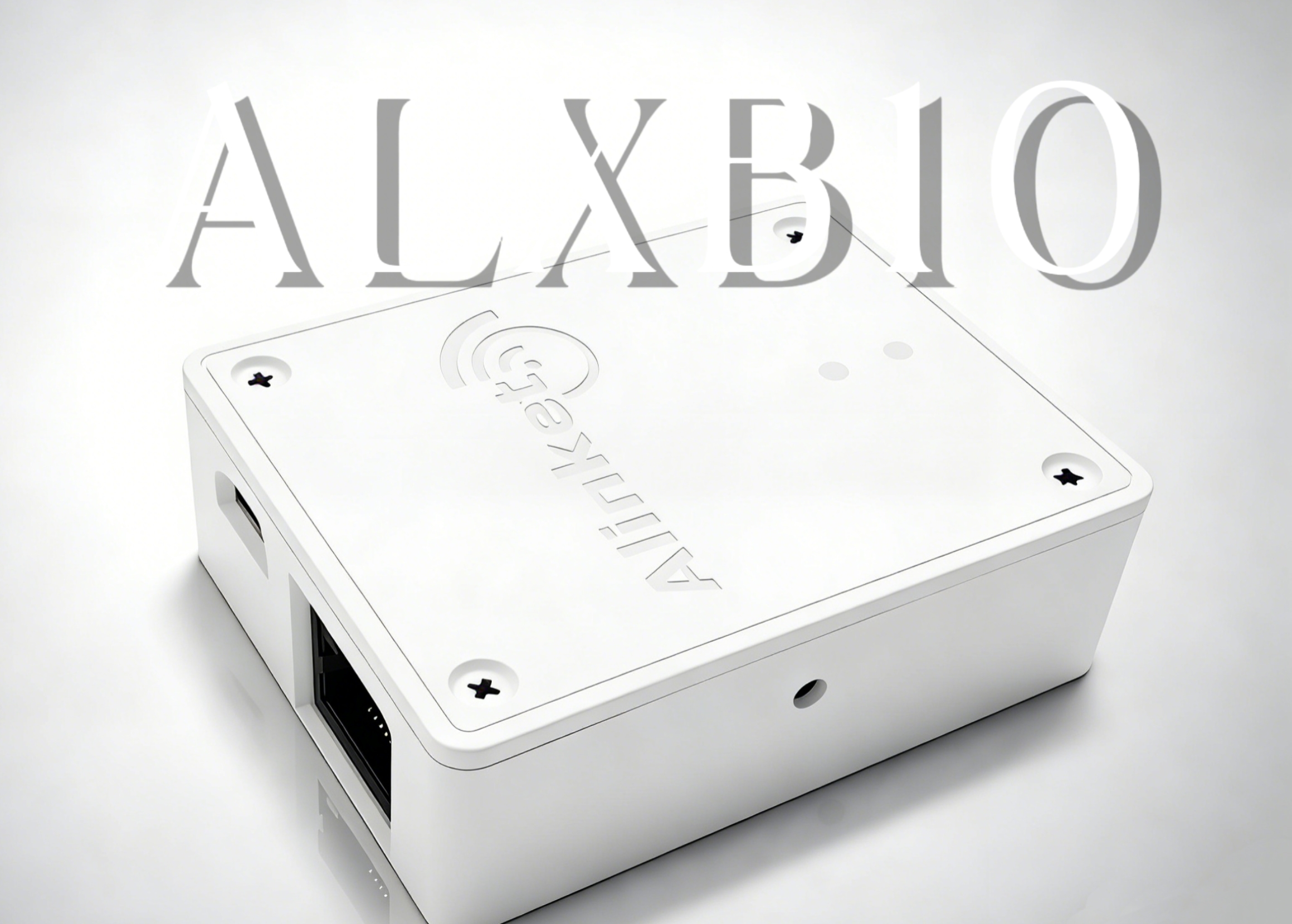
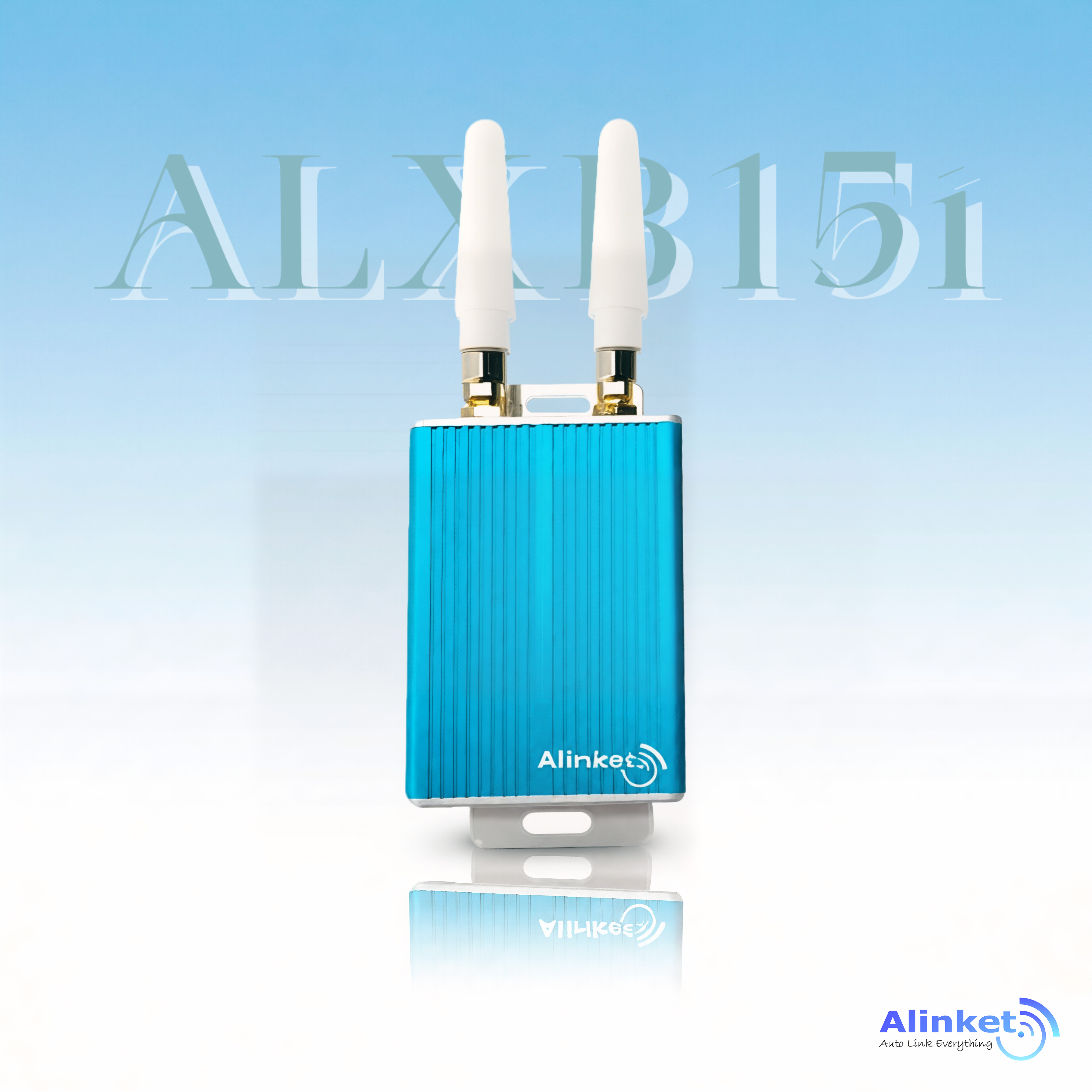
Ethernet Bridge Terminals: Legacy Device Transformation
Core Technical Advantages
Flashlink Provisioning: Allows operators to deploy SSID and EAP credentials via a mobile app, enabling "milliwatt-level" energy usage during the onboarding phase.
ACM & Transparent Mode: Simplifies configuration and reduces development cycles from months to days.
Hardware Encryption Engine: Dedicated hardware accelerators handle EAP-TLS certificate verification and AES encryption, reducing power consumption by over 30% compared to software-only solutions.
Conclusion
As we transition from "Internet of Everything" to "Intelligence of Everything," security is the lifeline of digital transformation. Alinket Technology breaks the barrier between enterprise-grade security and fragmented IoT terminals. Whether for new product R&D or legacy asset upgrades, Alinket provides self-contained, easy-to-deploy, and low-power solutions to build a secure foundation for global IoT infrastructure.
Technical Consultation & Inquiries
Marketing Email: marketing@alinket.com
Address: Room 221, Building 1, No. 706 Wuxing Road, Pudong New Area, Shanghai
Official Website:www.alinket.com